Galileo Feature — Bringing Autonomous Racing to a Broad Audience
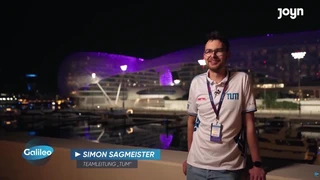
One of the most rewarding moments of our work in autonomous racing was seeing it reach far beyond the research community. Our team and technology were featured by Galileo, one of Germany’s best-known TV science and technology formats.
For me, that mattered not just because of the visibility, but because it showed that our work had become understandable and compelling to a broad audience. Autonomous driving often feels abstract. A race car operating at the limit changes that immediately.
Why this mattered
Autonomous racing is visually dramatic by nature. But what makes it truly powerful is what it represents behind the scenes:
- robust perception in a competitive environment
- reliable motion control near the handling limit
- modular software that has to perform under real-world pressure
- AI and planning systems that interact with other vehicles in real time
A media format like Galileo can make those ideas tangible. Suddenly, the work is no longer just about algorithms and software architecture. It becomes a story about what autonomous systems can already achieve today.
What made the story worth telling
By the time the coverage happened, we were no longer talking about simple demonstrations. We had already shown that our software could:
- compete on a Formula 1 circuit
- handle overtaking scenarios autonomously
- operate safely and reliably over extended testing
- perform in front of a public audience under race conditions
That combination makes for strong storytelling because it is both technically meaningful and visually impressive.
My role
As team lead, I was deeply involved in shaping the software direction behind these results and in helping communicate what made the achievement special. Media coverage is not just about being seen — it is also about explaining why the result matters.
In this case, the message was clear: autonomous driving research can already do things that feel extraordinary when you see them in action.
